

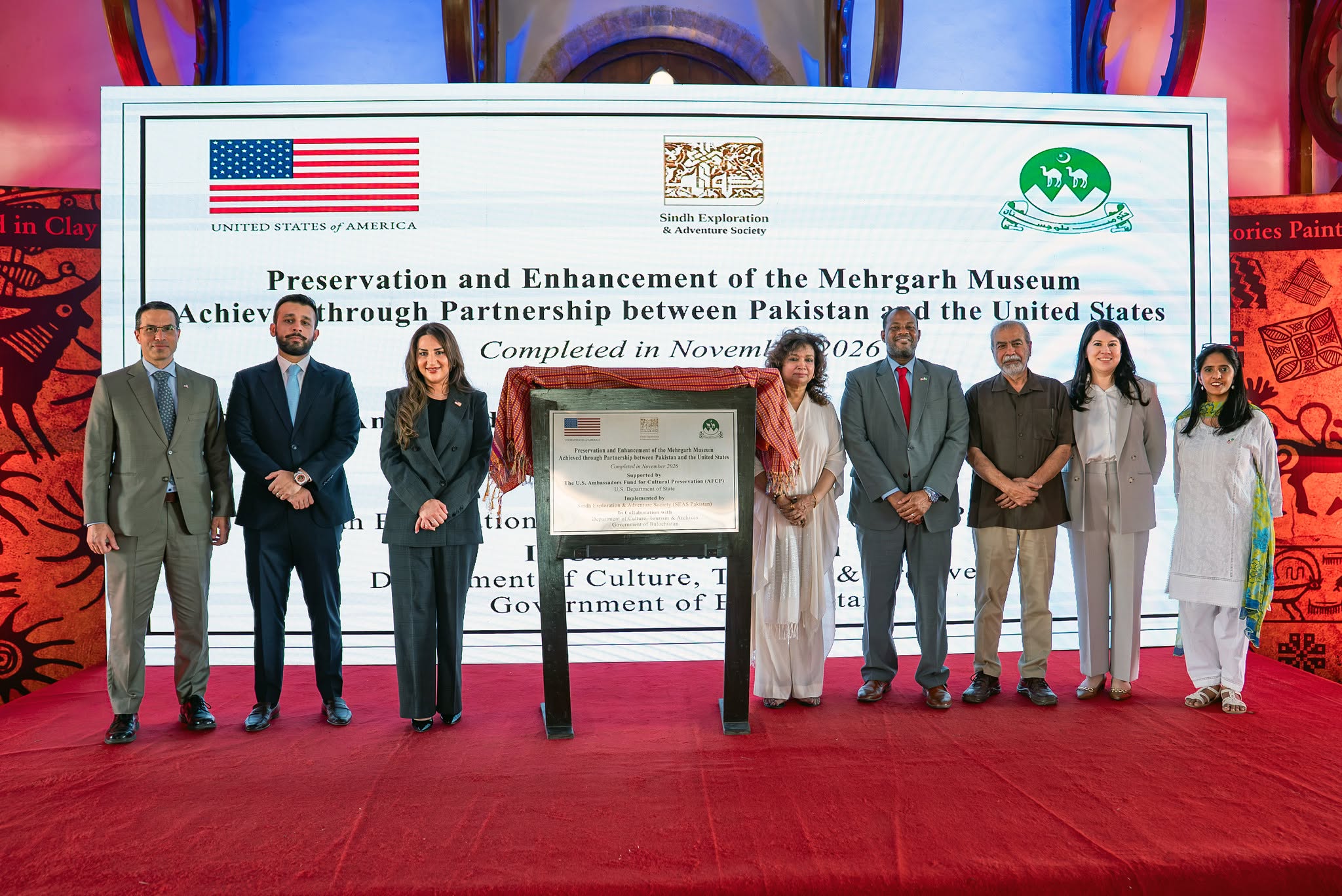
QUETTA | A US-funded project worth more than $320,000 to preserve Balochistan’s ancient Mehrgarh heritage and modernize the Mehrgarh Museum in Quetta has been completed, marking a significant step toward protecting the province’s archaeological treasures.
Over $320,000 in US assistance supports preservation of ancient artifacts, modernization of Mehrgarh Museum in Quetta and training of local heritage specialists
US Chargé d’Affaires Natalie Baker attended the completion ceremony alongside Balochistan Chief Minister Mir Sarfraz Bugti, Parliamentary Secretary Nawabzada Mir Muhammad Zareen Khan Magsi, and Fulbright alumni Dr. Asma Ibrahim and Dr. Kaleemullah Lashari.
The initiative, funded through the US Ambassadors Fund for Cultural Preservation (AFCP), is the first project completed under the program in Balochistan, extending its presence to all four provinces of Pakistan.
According to US officials, the project focused on conserving valuable Neolithic-era artifacts discovered at Mehrgarh, upgrading museum facilities to improve preservation and exhibition standards, and training local archaeologists and heritage professionals in long-term conservation techniques.
The initiative also aimed to improve public access to the museum and strengthen community engagement, providing greater opportunities for students, researchers and visitors to explore Balochistan’s ancient history.
Mehrgarh, considered one of South Asia’s earliest agricultural settlements, holds exceptional archaeological significance for understanding early human civilization, farming and social development.
US officials reaffirmed their commitment to supporting Pakistan’s cultural heritage preservation, emphasizing continued cooperation to protect historically significant sites and artifacts for future generations.
The project’s completion is expected to strengthen archaeological research, heritage conservation and public awareness of Balochistan’s rich cultural history.

