

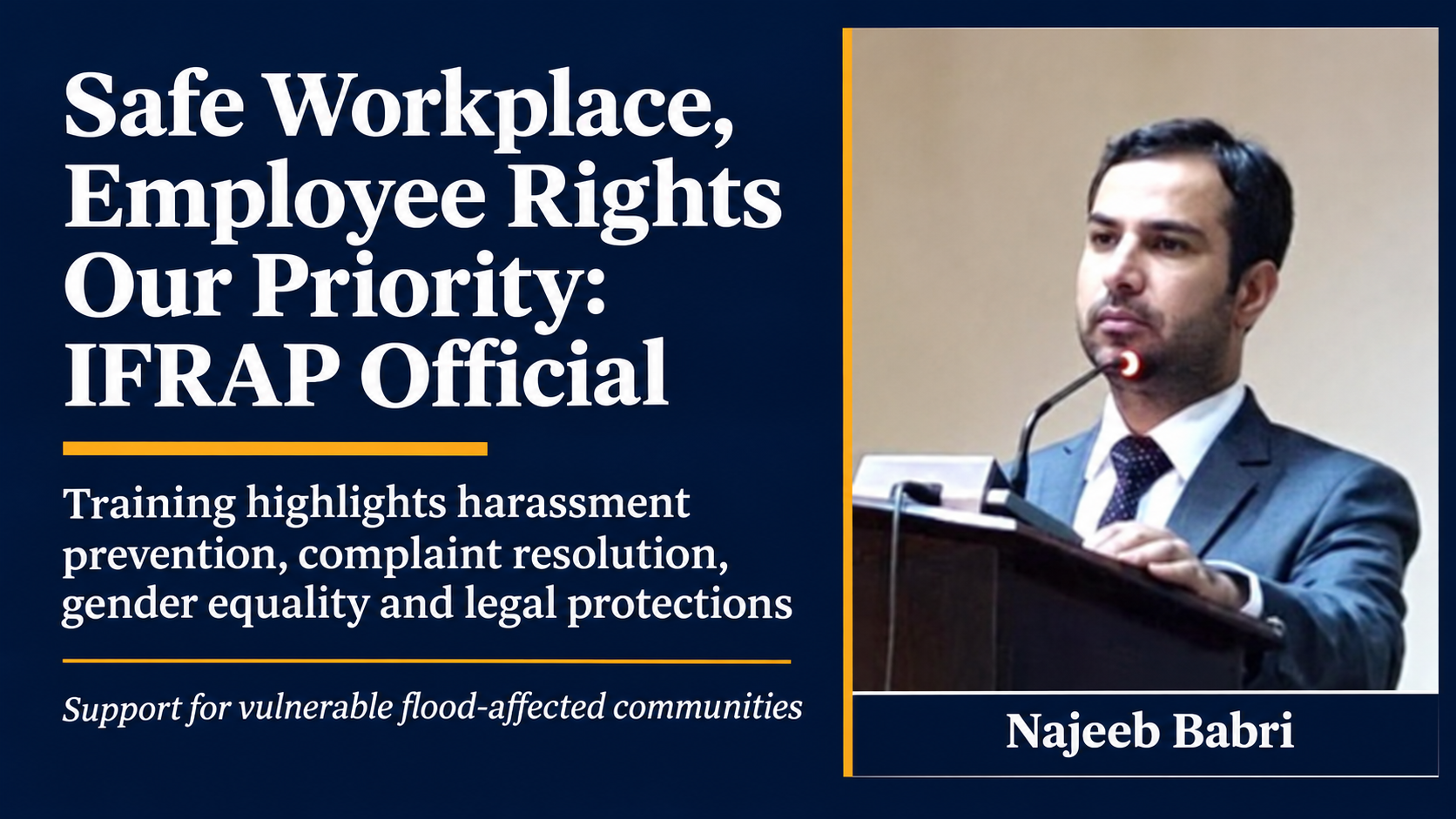
QUETTA l Integrated Flood Resilience and Adaptation Project (IFRAP) Housing Reconstruction Unit Chief Operating Officer Najeeb Babri has said that ensuring a safe, dignified and harassment-free workplace, protecting employees’ rights and addressing complaints effectively remain key priorities of the project.
Najeeb Babri emphasizes harassment prevention and effective complaint resolution; training session highlights gender equality, legal protections and support for vulnerable flood-affected communities
Addressing a training session on the Prevention of Sexual Exploitation, Abuse and Harassment (PSEAH) at the National Institute of Public Administration (NIPA), Quetta, he said special attention was being given to female-headed households, elderly citizens and persons with disabilities in flood-affected housing reconstruction.
Babri said the project’s Grievance Redress Mechanism (GRM) provides a framework for transparent and impartial complaint handling, while awareness programs help strengthen staff capacity and professional accountability.
Safe Workplace, Employee Rights Our Priority: IFRAP Official
Project Director Infrastructure Development Component-I Engineer Waseem Ahmed Babai emphasized gender equality, harassment prevention and women’s participation in development, encouraging women to report discrimination and harassment without fear.
High Court lawyer Zarghoona Bareech briefed participants on workplace harassment laws, employee rights, anti-harassment committees and legal complaint procedures.
IFRAP Gender Specialist Rabia Zakir highlighted the importance of confidentiality, survivor support, nondiscrimination and institutional accountability in preventing sexual exploitation and abuse. Representatives of partner organizations, including NRSP, BRSP, Taraqee Foundation and field teams, attended the session.
The training concluded with the distribution of certificates, reaffirming the project’s commitment to workplace safety, employee protection and effective grievance redressal.

