

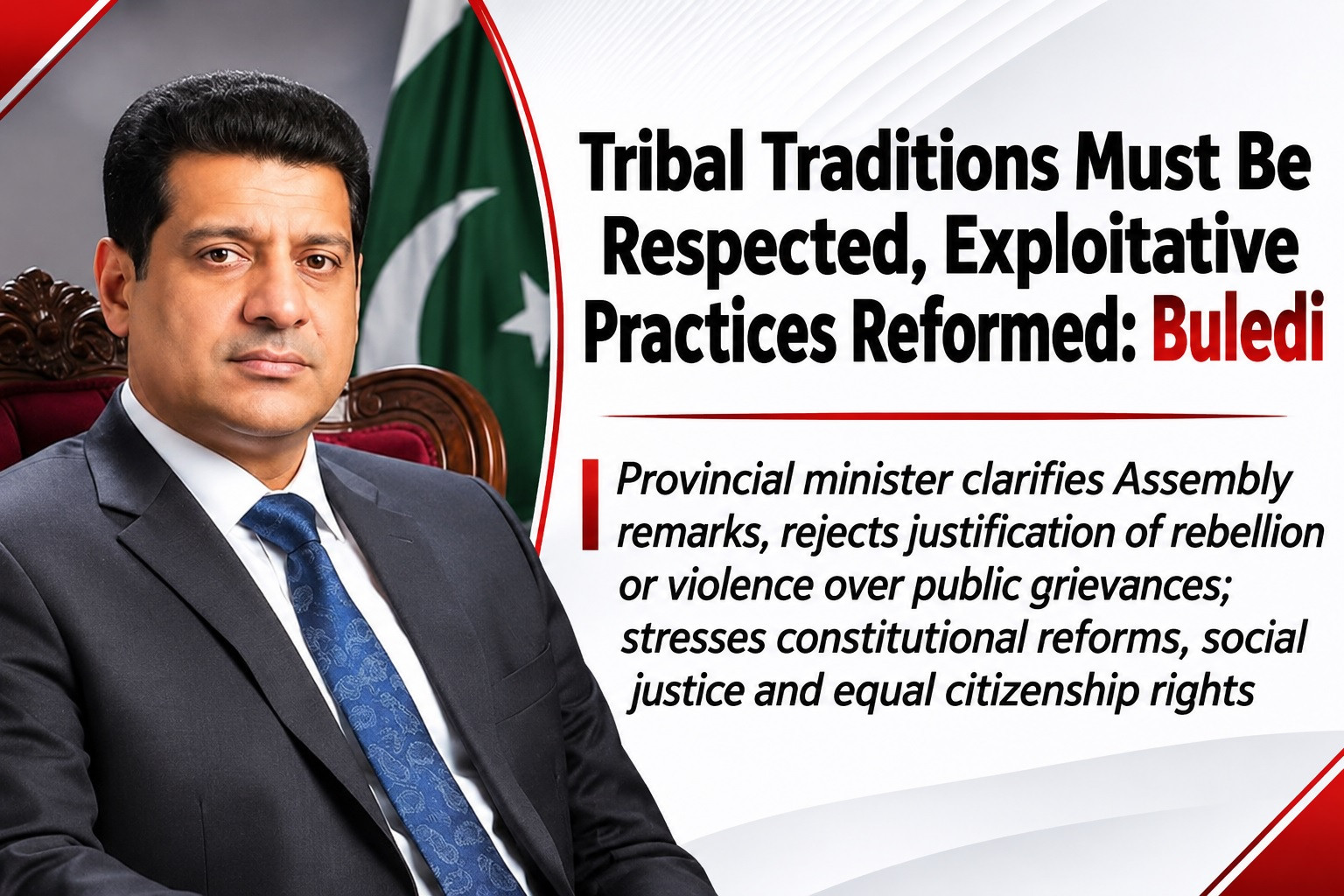
QUETTA | Balochistan Minister for Planning and Development Mir Zahoor Ahmed Buledi has said that his criticism of exploitative practices within the tribal and Sardari systems was never intended to disrespect tribal traditions, elders or any individual, emphasizing that constitutional and legal reforms are essential to eliminate social injustice, discrimination and outdated practices.
Provincial minister clarifies Assembly remarks, rejects justification of rebellion or violence over public grievances; stresses constitutional reforms, social justice and equal citizenship rights
Clarifying his recent remarks in the Balochistan Assembly regarding the tribal system, Buledi said his intention was to highlight practices that promote prejudice, hatred, violence and social divisions rather than criticize the positive traditions and cultural values of tribal society.
The provincial minister rejected interpretations by certain sections of the media suggesting that his references to public grievances and historical or political personalities amounted to a justification for rebellion.
He categorically clarified that he had neither supported nor justified rebellion, violence or any unconstitutional action on the grounds of public deprivation, maintaining that his position was firmly based on the supremacy of Pakistan’s Constitution, national unity and peaceful democratic reforms.
Buledi said certain outdated and exploitative practices associated with the tribal and Sardari systems encouraged discrimination, tribal extremism and social inequality, undermining democratic values and fundamental citizenship rights.
He emphasized that while the positive aspects of tribal traditions deserved respect and preservation, practices that deprived citizens of equal opportunities and basic rights must be addressed through constitutional, legal and gradual reforms.
The minister maintained that Balochistan needed to advance towards modern democratic values, social justice and inclusive development, in line with other provinces of the country.
He reiterated that the objective of reforms should not be to undermine tribal identity or cultural traditions but to eliminate exploitation and ensure justice, equality and equal opportunities for all citizens.

